
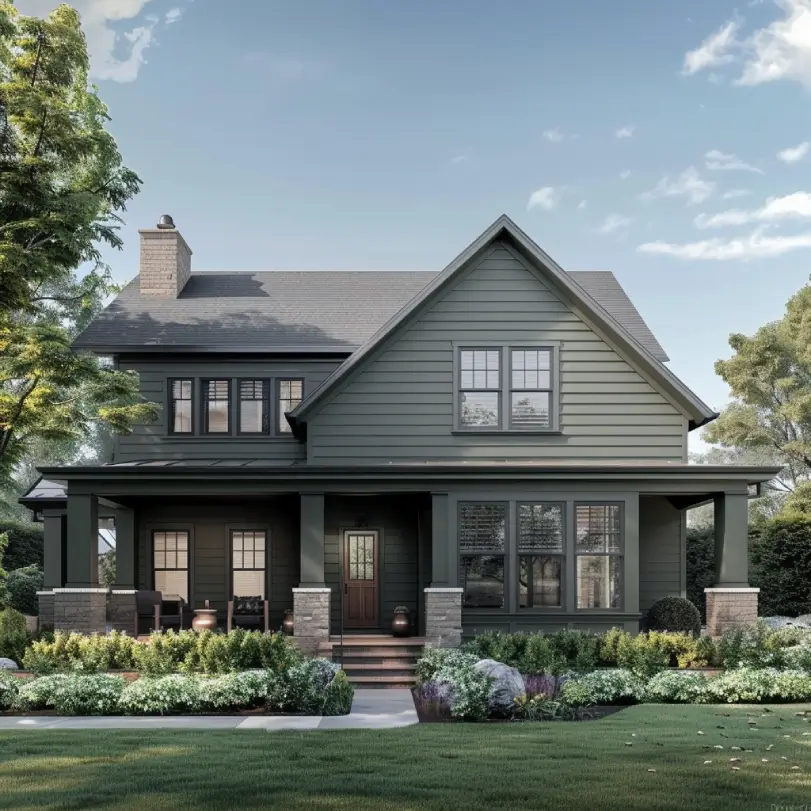

If you’ve ever shopped for paint colors before, you know just how tricky it can be to find a paint color that looks good not just on the swatch but also in your room in different lights. And exterior paint? Well, it’s even harder because there are more variables: weather, direction of the sun, foliage around the house, and on and on. But the good news is that there are still several great options for you out there! Let’s take a look at my favorite green exterior paint colors from Sherwin-Williams…


Sherwin-Williams Acacia Haze
If you’re looking for an exterior green option that leans cool-toned with blue undertones without looking like teal, SW Acacia Haze is a great option for you. Sherwin-Williams describes it as a medium green with a “cool, lazy Sunday vibe.” Relaxing, calming, but still warm and inviting. It also has a touch of gray in it, which keeps it feeling softer and more contemporary. Acacia Haze has a light reflective value (LRV) of 32, which in my opinion is the perfect LRV for an exterior green in a hot climate that won’t be too dark and absorb heat but also won’t look pastel in bright daylight. The higher the LRV, the more light the color reflects and the lighter it will appear. If you’re looking for a similar shade with less of a blue undertone, try SW Evergreen Fog.


Sherwin-Williams Retreat
If you like the idea of Acacia Haze but you’re looking for a darker, moodier shade, SW Retreat is your friend with an LRV of 21. This muted green also has blue and gray undertones, and Sherwin-Williams describes it as “the fresh feeling of mountain air.” Keep in mind that in more overcast light, Retreat does lean more gray. If you’re breaking away from neutrals but still want something subdued, this may be the perfect green for you. But if you want a green that always looks like green, you may want to try a more color with less of a gray undertone.


Sherwin-Williams Pewter Green
If you want a green that leans extra dark and moody—maybe for a rustic but modern cabin in the woods—SW Pewter Green with an LRV of 12 may be right for you. Sherwin-Williams seems to agree with me about the modern cabin idea because their description states that Pewter Green is a “cool green that complements natural elements like wood and metal.” This is a color that looks right at home with black trim, but like Retreat it has a tendency to lean more gray (or in this case, charcoal) in overcast lighting. If you’re looking for a similar LRV but warmer green, I recommend SW Rosemary, which has more of a true green look and won’t lean as gray when it’s cloudy.


Sherwin-Williams Cascade Green
If everything I’ve shown you so far has been too dark, I recommend that you check out SW Cascade Green. With an LRV of 43, this shade will appear much more like a pastel green, especially in bright daylight and even more so if you use an exterior paint with a higher sheen. Cascade Green is also part of Sherwin-Williams’ Historic Color collection, so if you’re painting an older home and want to stick to authentic colors, this could be a great option for you. Keep in mind that Cascade Green is not to be confused with SW Cascades, which is a very different shade of dark teal. So be careful of that when you order your paint.


Sherwin-Williams Green Earth
And finally, if you’re looking for more of a sage green with warmer undertones, SW Green Earth is exactly the color I would pick. And in fact, it’s almost identical to the color I did pick for my own home, Benjamin Moore Creekside Green (pictured above). The great thing about this medium green shade with an LRV of 31 is that it has a warmth to it that always makes it appear like a true green, no matter the light. But it still has gray undertones, which keeps it from looking garish or baby puke-y (if you know, you know).

But my favorite thing about this kind of green for an exterior has to be that it looks so good next to bright green foliage. I have several large pecan trees in my front yard, and their warm leaves clashed with every cooler-toned green I tested. But a muddy sage like BM Creekside Green on the bottom? Perfection.
What I Learned Testing Sherwin-Williams Green Exterior Paint Colors
Picking a green exterior paint color is one of those decisions that seems simple until you actually start looking at paint samples. There are hundreds of beautiful greens, but the challenge is finding one that looks just as good on your home as it does in a photo.
One thing I quickly learned while testing green paint colors is that the “perfect” green doesn’t exist in a vacuum. The same color can look completely different depending on your home’s lighting, surroundings, materials, and even the time of day.
Before choosing a Sherwin-Williams green for your exterior, here are a few things I would consider.
The Green You See on the Paint Chip Isn’t Always the Green You Get
Exterior paint is tricky because you’re viewing it in a completely different environment than a store or your computer screen.
Natural light can bring out undertones that you don’t notice indoors. Some greens that look soft and earthy inside can suddenly lean blue outside, while others can become much brighter and more yellow than expected.
This is why I always recommend painting large samples and living with them for a few days. Look at them in direct sunlight, cloudy weather, and at different times of day. A color that looks perfect in the afternoon might surprise you in the morning.
Decide Whether You Want Your Home to Feel Earthy or Fresh
One of the biggest differences between green paint colors is the feeling they create.
Greens with warm undertones tend to feel more natural, cozy, and rooted in the landscape. These colors often have hints of olive, brown, or yellow and work beautifully with traditional homes, wood details, and natural materials.
Cooler greens with blue or gray undertones tend to feel a little more refined and calming. They can create a beautiful contrast with black accents, white trim, and modern exterior details.
Neither option is better—it really depends on the feeling you want your home to have.
Pay Attention to What’s Already Around Your House
When choosing an exterior paint color, your home’s existing features are part of the design.
Brick, stone, roofing, and landscaping all influence how a green paint color will look. A green that works beautifully on a home with white siding might feel completely different next to warm brick or a dark roof.
For example, homes with warm brick often look best with greens that have earthy undertones, while homes with gray stone or cooler materials may pair better with softer sage or blue-green shades.
The goal isn’t just finding a green you love—it’s finding a green that makes all the other elements of your home look better too.
Don’t Ignore Your Surroundings
One of the reasons I love green exterior paint is because it feels connected to nature. But your surroundings can also affect whether a color feels right.
If your home is surrounded by trees, plants, or a lot of greenery, a very similar green might cause your house to blend into the background. In that case, choosing a green with a little more contrast can help your home stand out.
On the other hand, if your landscaping is more neutral, a richer green can add a lot of character and make your exterior feel more inviting.
Think About the Style and Age of Your Home
Green is one of those colors that can work across so many different architectural styles, but the shade you choose can completely change the personality of your home.
Soft sage greens can create a charming cottage feel. Deeper forest greens can feel classic and dramatic. Earthy olive greens can look especially beautiful on historic homes because they feel timeless and connected to the natural colors that have been used for centuries.
For older homes especially, I love choosing colors that feel like they could have always belonged there—not something that will feel trendy for only a few years.
Always Test Before Making the Final Decision
If there is one thing I’ve learned from choosing exterior paint colors, it’s that samples are worth the extra effort.
A green that looks beautiful online may not work with your home’s unique lighting and surroundings. Before committing, test your favorites on large boards or directly on your exterior and observe how they change throughout the day.
The right green should feel like it was always meant to be there.
I hope this guide is helpful to you in your exterior paint search! For more on my own exterior painting journey, check out How to Paint Old Peeling Wood Siding, or take a look at My Top 5 Green Exterior Paint Colors by Benjamin Moore.
If you’re looking for more free paint color suggestions, check out the rest of my favorite paint colors.

What colors are the trims??
Love this post. What is the trim color with the Cascade Green? This is exactly what I have been looking for.
What is the trim in the house with cascade green?
Hi, what color is the trim on the cascade green colored home? We really liked this combo and wanted to see if the trim was adaptive shade or something different. Thank you for the help.
What are the 4 colors on the picture where you are holding the green foliage against it?